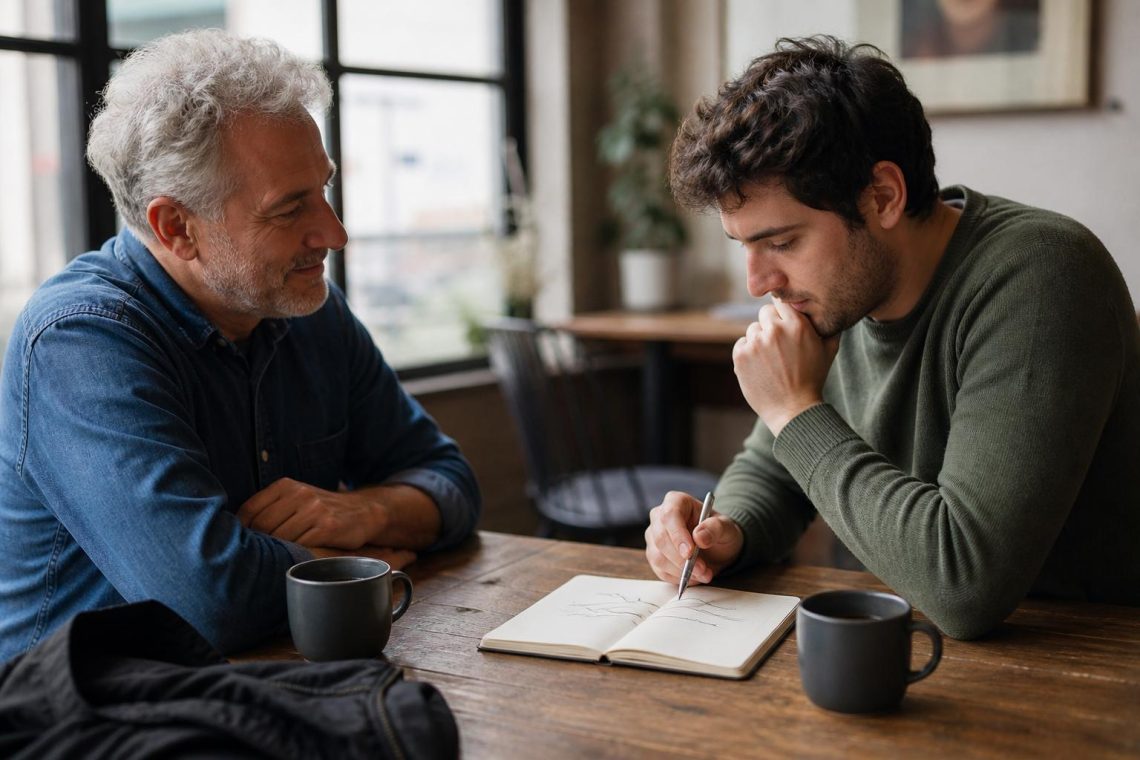
A Good Mentor Helps a Younger Man Think, Not Obey
A younger man asks an older man whether he should leave his job. The older man has seen more workplaces, made more mistakes, and can probably spot problems the younger man cannot see yet.
So he gives a clear answer: leave.
The advice might be right. But something important is missing. The younger man has received a decision without learning how to make one.
I have noticed that mentoring often becomes controlling in very ordinary ways. It rarely begins with someone trying to take over another person’s life. It begins with useful advice, genuine concern, and the understandable desire to prevent a mistake.
The problem is that protecting someone from every wrong decision also protects him from developing judgment.
A good mentor does not simply lend a younger man his answers. He lets him borrow his reasoning until the younger man can reason more clearly for himself.
Why good advice can quietly become control
Many younger men are drawn to certainty. When life feels confusing, the person who speaks most confidently can seem like the person who understands it best.
This is especially true when a younger man is trying to establish himself. He may be choosing a career, figuring out dating, managing money, or deciding what kind of man he wants to become. A firm instruction can feel like relief.
Mentors can enjoy that certainty too. It feels good to be trusted. It can also be satisfying to watch someone follow your advice and get a good result.
That creates a subtle temptation. The mentor starts answering questions the younger man should be learning to answer himself. What began as guidance becomes permission seeking.
You can often hear the change in the questions. Instead of asking, “What do you think I am missing?” the younger man starts asking, “What should I do?” Then, eventually, “Are you okay with me doing this?”
Those questions sound similar, but they describe very different relationships.
A mentor should offer perspective, not become an extra authority figure whose approval is required before every important choice.
Show him how you think, not just what you would do
The most useful part of experience is not the conclusion. It is knowing what to pay attention to.
Suppose a younger man is deciding whether to stay in a difficult relationship. Telling him to stay or leave may be tempting, especially if the answer seems obvious from the outside. But a better conversation explores how the decision is being made.
Does he feel respected when they disagree? Are apologies followed by changed behavior? Is the relationship difficult because two imperfect people are learning, or because one person keeps asking the other to accept what should not be accepted? Is he staying because the relationship is worth repairing, or because leaving would make him feel like he failed?
These questions do more than produce an answer. They give him a way to examine future relationships too.
This is the distinction worth remembering: borrowed decisions solve today’s problem, while borrowed reasoning develops tomorrow’s judgment.
An experienced man can make his thinking visible by saying what he notices, what concerns him, and what facts would change his opinion. He can also admit where his own preferences are shaping his advice.
For example, “I value stability, so I may be more cautious about leaving a job than you are. What concerns me is not the risk itself. It is that you have no savings and no clear plan for what comes next.”
That kind of answer is useful because it separates the mentor’s personality from the actual problem. It also shows that thoughtful decisions are not made by pretending personal preferences do not exist.
Let small consequences teach what instructions cannot
One mistake caring people make is treating every avoidable mistake as a mistake they must prevent.
But some lessons only become real when they cost something.
A younger man may ignore advice about preparing for an interview, lend money to an unreliable friend, or commit too quickly to a project he has not considered carefully. If the likely consequence is disappointment, inconvenience, or embarrassment, stepping back may teach more than another warning.
This does not mean watching silently while someone walks into serious danger. High stakes decisions involving safety, major debt, illegal behavior, or lasting harm call for greater directness. A good mentor is not passive.
The practical tradeoff is knowing when protection matters more than independence. My preference is to be clear about serious risks, but leave ordinary choices with the person who must live with them.
There is also a difference between allowing a consequence and withdrawing support. A mentor can say, “I do not think this is a wise choice, but it is yours. If it goes badly, I will help you think through what happened.”
That response preserves both honesty and dignity.
Younger men sometimes hide mistakes from older men they respect because they expect a lecture. Once that happens, the mentor only hears about decisions that worked. He becomes less useful precisely because the younger man no longer feels safe bringing him the truth.
A calm response to a poor choice does not mean pretending the choice was good. It means treating the mistake as information rather than evidence that the younger man cannot be trusted with his own life.
The goal is less dependence, not more loyalty
A mentor may feel important when someone calls before every decision. But constant dependence is not proof that the mentoring is working.
The healthier sign is that the questions improve over time.
At first, a younger man may ask what to do. Later, he may explain the options, name the tradeoffs, and ask whether there is anything he has overlooked. Eventually, he may make the decision himself and return to discuss what it taught him.
That is progress.
It also means the younger man will sometimes choose differently than his mentor would. If disagreement is treated as disloyalty, the relationship was built around obedience rather than growth.
Good mentoring requires humility from both people. The younger man needs enough humility to listen. The older man needs enough humility to accept that experience gives him perspective, not ownership.
If you mentor a younger man, pay attention to your next conversation. Before telling him what to do, ask him to walk you through what he sees, what he fears, and what he thinks each choice will cost.
Then offer the part he cannot yet see.
The best question is not whether he followed your advice. It is whether he can make a wiser decision the next time you are not in the room.

 BeFun BeKind